
Media kit or pitch deck? What you need for the perfect pitch
So you’ve been making content, for a while and you’re ready to land your first brand deal. It’s time to create the documents that will communicate who you are and what you do to the brands you want to work with.
Both a media kit and a pitch deck can be used to share a snapshot of your audience size, your creator rates, and any specific projects you intend to showcase.
This article covers the benefits of each and their differences. Linked below, you can access my free pitch deck and media kit templates

Why you need a media kit or pitch deck
When you’re talking to brands, they’ll often ask for your rates, a deck or a media kit. They might use the deck to share with team members or use it to make decisions on how they want to work or partner with you
I recommend taking the time to create one
Forces you to get really clear on the value of your community and your content
Saves time as you’ll have key metrics and data collected in one place. I keep mine in Canva so I can customise it to whatever brand I’m talking to
A professional pitch deck can set you apart from other creators. Brands don’t want to work with people who just make the best content; they also want to work with those who are professional
If you want to work on a more complex partnership, such as event or podcast sponsorship, a deck can help you present your project in a clear format
What is an influencer media kit?
A media kit is a one-page snapshot of your audience, platforms and rates.
Your media kit will usually include
Social handles, audience size and demographics
Your rates per video, a carousel or a story mention
Past collaborations, including testimonials and content performance
Most content collaborations can be arranged over email, but having your information in a clear, well-designed deck will save time and move deals along faster.
What is a pitch deck?
Pitch Decks are up to 10-page documents that detail larger projects or longer-term collaborations. A pitch deck might include:
Bio, key achievements, awards and press (You’re often selling that you’re a trusted person to deliver this type of project)
Past collaborations, testimonials and previous results
Information on the opportunity you’re presenting. For example, if you’re seeking podcast sponsorship, include information about the show
Rates. It can be helpful to include sponsorship tiers and deliverables a brand would receive for each one
Finish with a clear call to action
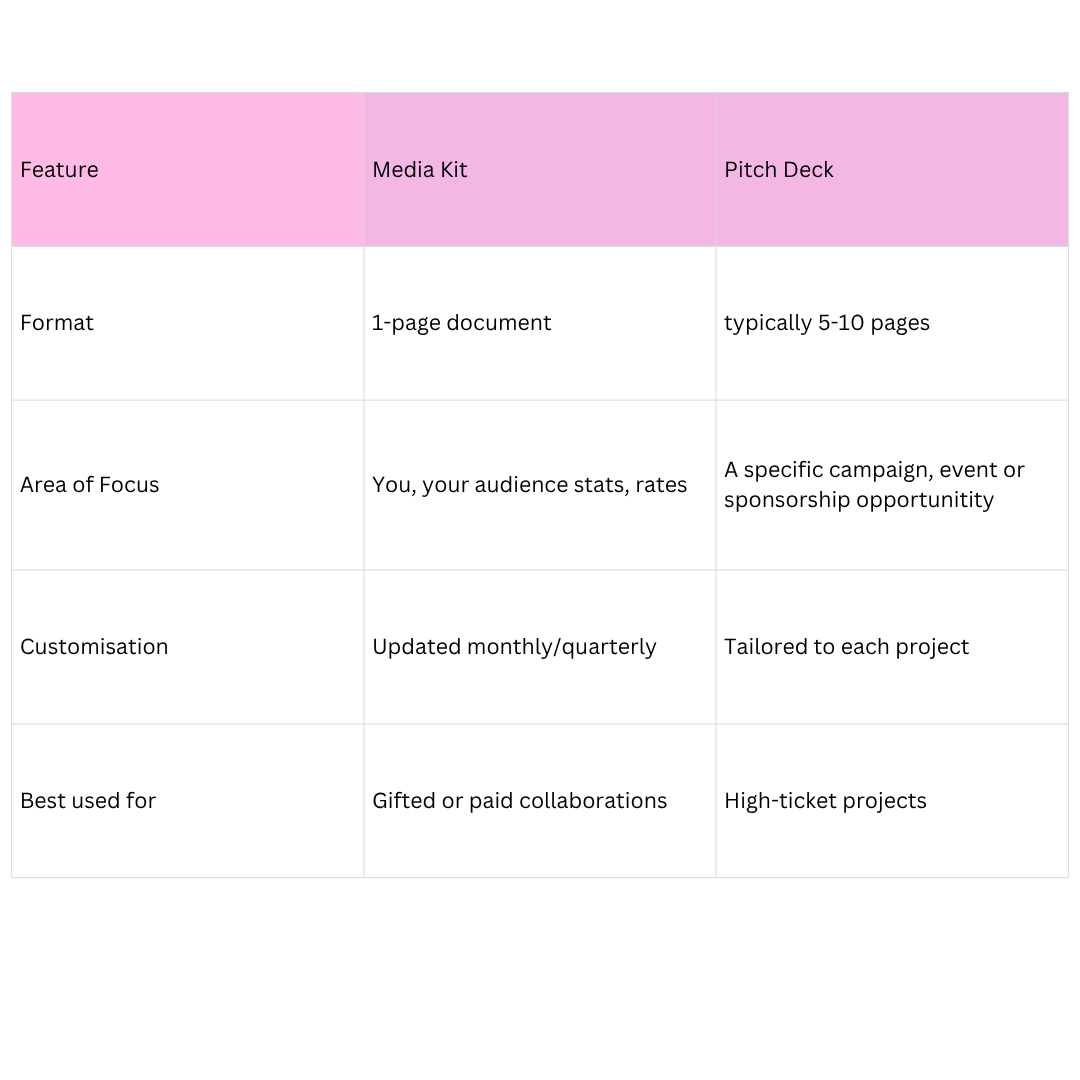
Media Kit vs. Pitch Deck Cheat Sheet
Use the table below to identify which document you need
Keep your outreach and project organised
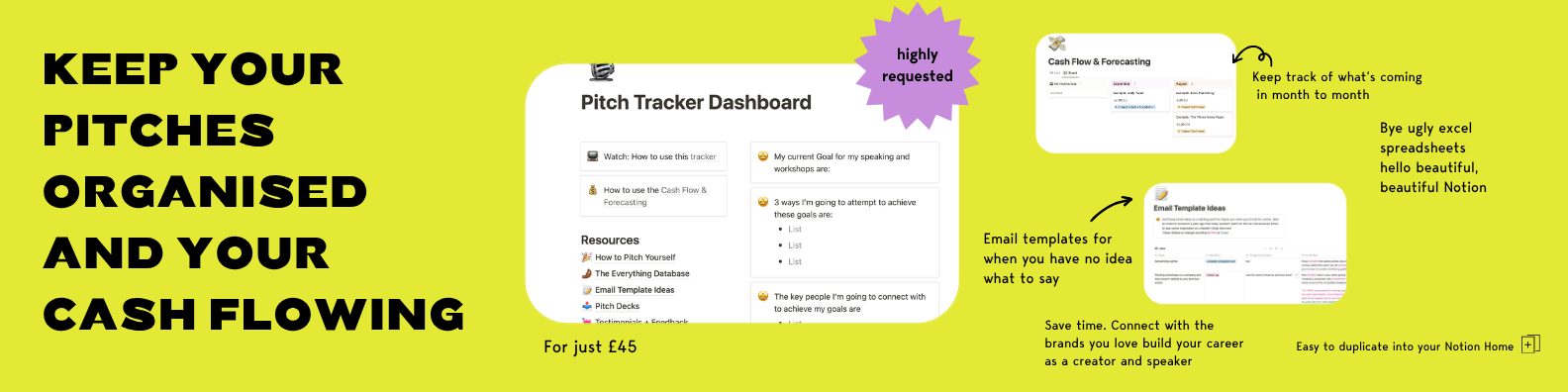
Once you start sending out media kits and pitch decks, keeping track of who received what (and when to follow up) gets messy fast. I built a CRM especially for creators and founders who want to manage their brand deals like a pro and stop letting opportunities fall through the cracks
Use The Ultimate Pitch Tracker (Notion Template) to manage your brand contacts, cashflow, and incoming payments in one simple dashboard.
Looking to master the exact cold emails, rate negotiations, and pitching frameworks that land four-figure brand deals? Join us inside Pitch School